Spray Foam Roofing Services in Statesville, NC
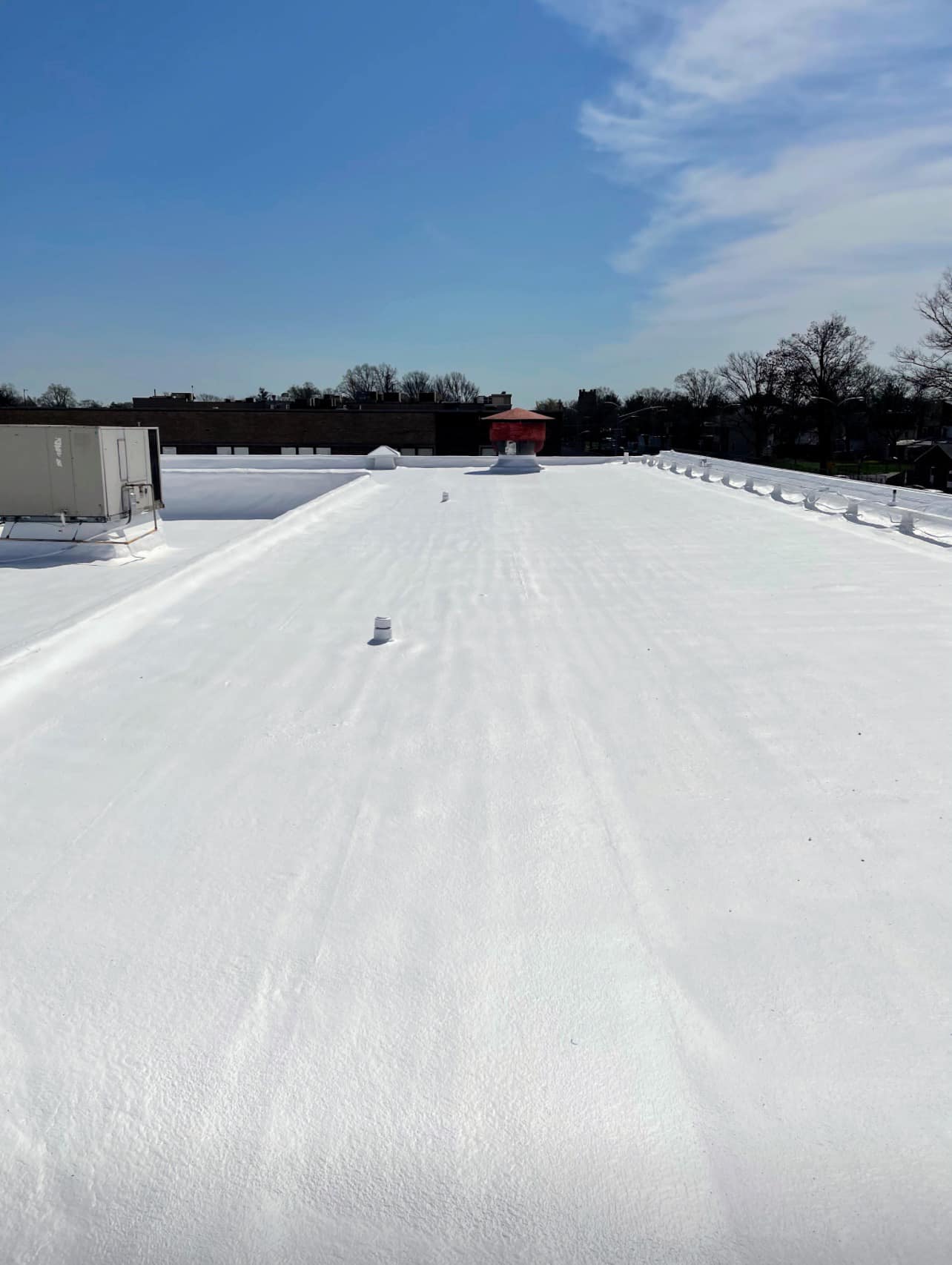
Spray foam roofing in Statesville, NC that seals out leaks, cuts energy bills, and strengthens your roof for decades. US Coating Systems delivers a seamless, high‑performance Spray Polyurethane Foam (SPF) roofing system built to stand up to North Carolina weather while keeping your building comfortable and efficient.
How We Do it

Roof Assessment & Prep
We inspect your existing roof, address any substrate damage, fix drainage issues or weak spots, and prep the surface for foam application.

SPF Application
We spray closed‑cell polyurethane foam across the roof — filling cracks, sealing gaps, and creating a continuous, monolithic layer that bonds tightly to the substrate.

Top‑Coat & Finishing
We apply a reflective, UV‑resistant elastomeric coating on top of the foam. This layer protects the foam, reflects sunlight, and offers long-term waterproofing and energy‑efficient performance.
When your roof needs more than a patch, go Foam Strong
A roof is more than a cover over your head. It’s a shield against weather, a barrier against leaks, a guard against wasted energy. With our spray foam roofing system, your roof becomes a fortress, sealing out rain, sealing in comfort, sealing up your worries.
Our expertise with closed‑cell spray polyurethane foam — paired with top-quality coating materials — sets us apart. We emphasize proper substrate preparation and precise application, ensuring foam adhesion and system performance. Our team works carefully to avoid moisture or overspray issues. We offer transparent, fair pricing and back our work with a commitment to durability and customer service. With our hands-on approach, you get more than a coat of foam — you get a roof system engineered for long-term protection and efficiency.
Why Closed‑Cell Spray Foam Roofing Is a Smart Investment — and What You Should Know Before Installation?
Closed-cell SPF roofing offers some of the highest insulation and waterproofing performance available. The closed cells in the foam make it dense and rigid once cured, providing outstanding thermal resistance — typically R‑6 per inch or more. That means you get strong insulation without needing thick layers. The foam expands to fill cracks, seams, and penetrations, forming a continuous, seamless barrier that blocks air infiltration and moisture. This kind of airtight seal can reduce energy loss significantly, cutting heating and cooling expenses — often yielding a noticeable return on investment over time.
Because the foam is water‑repellent and does not absorb water, it protects the roof deck and underlying structure from leaks, ponding, and water damage. It also strengthens the roof — adding rigidity and resisting wind uplift, even under severe weather conditions. When finished with a reflective top coat, the roof deflects solar radiation, which helps keep indoor temperatures more stable and reduces HVAC load.
That said, not all installations are equal. The surface must be dry, clean, and properly prepared before spraying. Humidity, dew, or cold surfaces can interfere with foam adhesion or curing — which may degrade performance or lead to blistering. That is why skilled application matters. Additionally, spray foam roofs perform best on flat or low‑slope roofs and may not suit steep‑sloped or shingled roofs. Because SPF forms a monolithic membrane, once installed it can be harder to inspect underlying layers. Routine maintenance — such as periodic re‑coating and roof inspections — helps extend the lifespan.
For property owners seeking long-term waterproofing, energy efficiency, and structural resilience, closed‑cell spray foam roofing stands out as a wise investment. Having a qualified, experienced contractor and proper installation conditions ensures you get a roof built to last decades.
FAQ
FAQ Questions and Answers
What kind of roofs are best suited for spray foam?
Flat or low‑slope roofs — such as commercial, industrial, or certain residential roofs — are ideal. Spray foam conforms to irregular surfaces, seals penetrations, and forms a continuous barrier.
Can spray foam be applied over an existing roof?
Yes. Closed‑cell SPF can often be applied on top of many existing roof substrates, avoiding the need for a full tear‑off. That saves money and reduces waste.
How thick should the foam layer be?
Typically at least one inch of closed-cell foam is applied, though thickness may vary depending on insulation needs, roof slope adjustments, or structural requirements.
Will the foam absorb water or lead to leaks over time?
No. Closed‑cell spray foam is water‑resistant and does not absorb water. It forms a seamless, waterproof membrane that helps prevent leaks, even under rain or ponding.
How long does a spray foam roof last?
With proper maintenance and periodic top‑coating, a spray foam roof can deliver reliable protection for 20 to 30 years or more. Many coatings further extend its lifespan.
Take the Next Step Toward a Better Roof
Your roof plays a direct role in the strength of your business. If you need repair, restoration, or a long lasting coating system, Carolina Roofing & Steel is here to provide dependable solutions. Call today to schedule a roof evaluation or request a clear, detailed quote. Your building deserves the protection of skilled hands and reliable workmanship. Let us help safeguard your investment with roofing built for long term stability.